Wedding Content Creator vs Videographer: What's Actually Different
Cinematic films vs same-day reels. A side-by-side comparison of deliverables, turnaround, gear, and pricing.
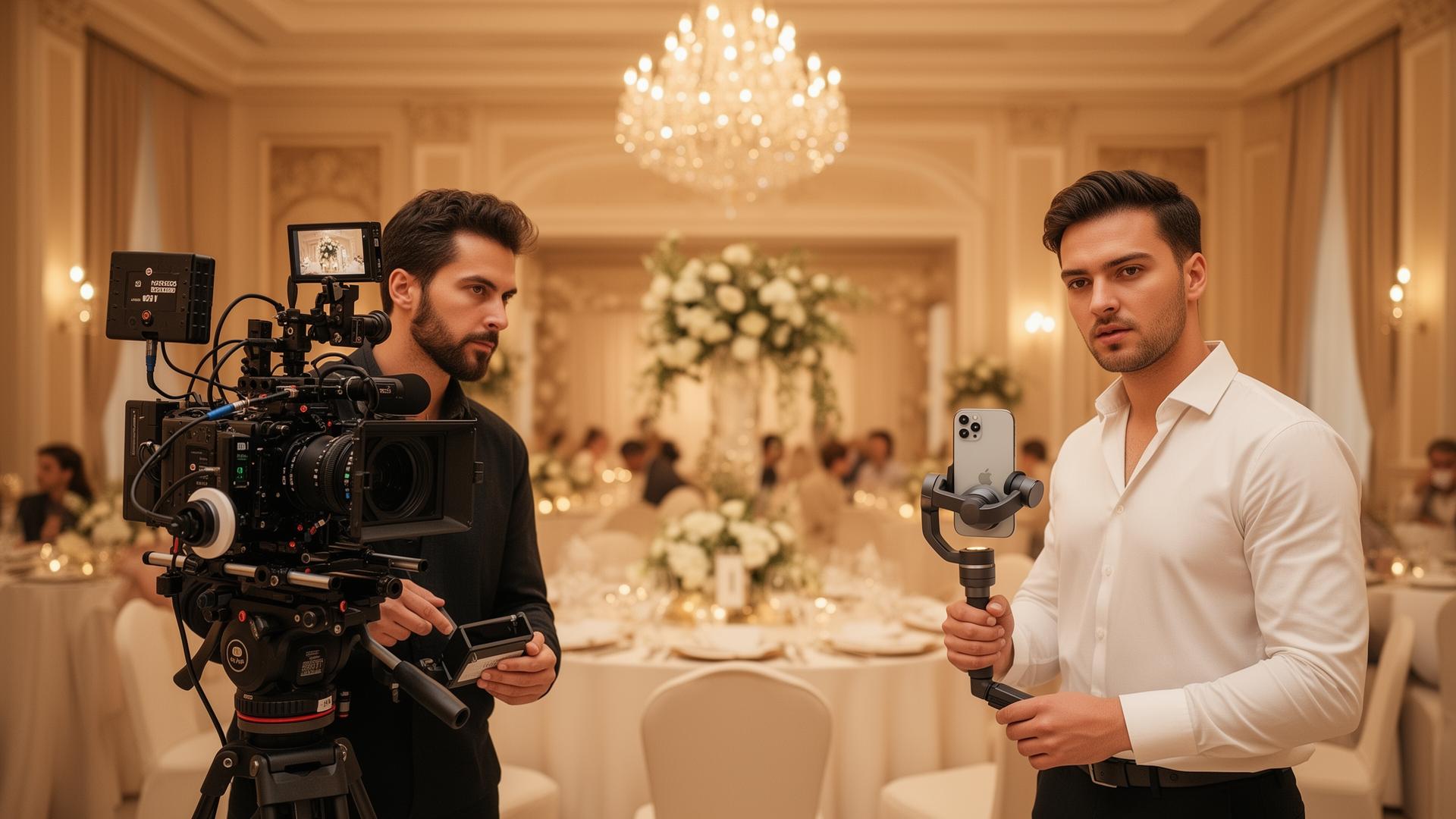
Of the three wedding-day visual vendors — photographer, videographer, content creator — the videographer vs content creator question is the one couples get most stuck on. They both shoot video. They both deliver edited footage. Surely one can do the other's job? In practice, no. The two roles produce structurally different products and serve different time horizons.
Quick answer
- Videographer = cinematic long-form film; content creator = vertical short-form reels.
- Videographer turnaround: 8–24 weeks. Content creator turnaround: hours to days.
- Videographer gear: cinema cameras + gimbals. Content creator gear: iPhone + smartphone gimbal.
- Videographer cost: $3,500–$8,000+. Content creator cost: $1,800–$3,800.
- A growing number of vendors offer hybrid packages — verify what you're actually getting.
- If budget only allows one, pick by deliverable horizon: forever (videographer) vs right now (content creator).
Two genuinely different products
A wedding videographer is making a film. The cinematic kind — a beginning, middle, and end, music swelling under vows, color-graded for warmth or mood, ceremony audio mixed in beneath a voiceover from the vow letters. The product is one deliverable, watched start-to-finish, usually shared as a YouTube or Vimeo link.
A wedding content creator is making content. Plural. Short. Vertical. Each clip works on its own — a first-look reel, a vows reel, a first dance reel, a sparkler exit reel — and the deliverable is a library of moments rather than a single film. Most clips run 15–90 seconds, sit well in Stories, and read on a phone with the sound off.
Side-by-side comparison
| Attribute | Videographer | Content Creator |
|---|---|---|
| Primary output | 1 cinematic film | 10–30 short reels |
| Length | 4–15 min film | 15–90 sec clips |
| Format | Horizontal (16:9) | Vertical (9:16) |
| Music | Licensed, scored to edit | Trending platform audio |
| Primary gear | Cinema mirrorless (FX3, R5C) | iPhone Pro Max + gimbal |
| Audio | Multi-source pro rig | Wireless lavalier |
| Color grade | Custom LUT, color-graded | Native iPhone color, light grade |
| Editing software | Premiere, DaVinci, Final Cut | CapCut, Premiere |
| Turnaround | 8–24 weeks | Same night – 2 weeks |
| Where it lives | YouTube, Vimeo, USB | Instagram, TikTok, camera roll |
| Average package | $3,500–$8,000+ | $1,800–$3,800 |
| Team | 1–3 person crew | Usually solo |
The hybrid trend (and the caveat)
A growing number of vendors now advertise hybrid packages: "cinematic film + same-day reel" from videographers, or "wedding film + Story pack" from content creators. The blur is real, but read carefully — the bulk of the labor is still on one side or the other.
A videographer's "+ 3 reels" add-on usually means 3 short verticals cut from the same footage, not 30 standalone clips. A content creator's "+ wedding film" add-on usually means a 60–90 second polished recap, not a 6-minute scored film. If you want both products at full depth, hire both vendors.
Should you hire both?
For weddings where the social-share experience and the long-form keepsake both matter, yes. Total spend is typically $5,500–$12,000 combined and the deliverables don't compete.
Critically: tell each one the other is coming. Videographers plan their shot sequences carefully — a stray vertical shooter in frame ruins a 12-second dolly. Content creators move quickly to catch candid moments — a videographer who didn't know to expect them can be thrown off. A 10-minute planning call between the two vendors avoids 90% of friction.
If the budget only allows one
Pick by deliverable horizon. The questions to ask yourself:
- Will I want to watch a sentimental film on every anniversary? Hire the videographer.
- Will I want to post wedding content while it's still relevant? Hire the content creator.
- Am I more excited about Instagram than YouTube? Hire the content creator.
- Do my parents care about a film they can watch on TV? Hire the videographer.
There's no wrong answer — only the wrong answer for the kind of memory you actually want to walk away with.
Delivered before the last dance.
Aisle is the delivery platform built for wedding content creators — a storefront, same-day reel delivery, and a vendor referral loop, in one system.
Frequently asked questions
What's the difference between a wedding videographer and a content creator?
A wedding videographer produces a cinematic film (4–15 minutes, scored, color-graded, horizontal) delivered 8–24 weeks after the wedding. A wedding content creator produces short vertical reels (15–90 seconds each, 10–30 of them) delivered within hours to days. Different format, different timeline, different intent.
Can a content creator replace a videographer?
If what you want is a polished cinematic film of your wedding, no. If what you want is fast, vertical, social-ready video, yes — and that's often enough for couples who care more about sharing than about a long-form film. Many couples hire both.
Are content creators just cheaper videographers?
No. The output is structurally different. A videographer's deliverable is one carefully scored long-form film; a content creator's deliverable is a stack of short clips designed for social platforms. Hour-for-hour, top content creators charge similar rates to mid-tier videographers — the package total is lower because the editing scope is different.
What gear does a videographer use vs a content creator?
Videographers shoot on cinema bodies (Sony FX3, Canon R5C, Blackmagic), gimbals, and pro audio rigs, working horizontal. Content creators shoot iPhone-first with a smartphone gimbal, wireless lavalier mics, and lens attachments — working vertical. Some content creators carry a cinema B-camera but iPhone remains the primary tool.
Will a videographer also deliver vertical reels?
Some now do — the line is blurring. But most videographers' workflow is built around a long-form film, with vertical reels offered as a small add-on (1–3 reels, $500–$1,000). A dedicated content creator delivers 10–30 reels as the main product.
What's the average cost of each?
Videographers average $3,500–$8,000+ for a wedding-day package; content creators average $1,800–$3,800. Hiring both typically costs $5,500–$12,000 combined — comparable to the photography budget.
If I had to pick one, which one?
Pick by what you actually want to walk away with. If you want a sentimental film you'll cry watching on anniversaries, pick the videographer. If you want footage that'll dominate your group chat for a month and live in your camera roll forever, pick the content creator.
Questions, answered.
- What's the difference between a wedding videographer and a content creator?
- A wedding videographer produces a cinematic film (4–15 minutes, scored, color-graded, horizontal) delivered 8–24 weeks after the wedding. A wedding content creator produces short vertical reels (15–90 seconds each, 10–30 of them) delivered within hours to days. Different format, different timeline, different intent.
- Can a content creator replace a videographer?
- If what you want is a polished cinematic film of your wedding, no. If what you want is fast, vertical, social-ready video, yes — and that's often enough for couples who care more about sharing than about a long-form film. Many couples hire both.
- Are content creators just cheaper videographers?
- No. The output is structurally different. A videographer's deliverable is one carefully scored long-form film; a content creator's deliverable is a stack of short clips designed for social platforms. Hour-for-hour, top content creators charge similar rates to mid-tier videographers — the package total is lower because the editing scope is different.
- What gear does a videographer use vs a content creator?
- Videographers shoot on cinema bodies (Sony FX3, Canon R5C, Blackmagic), gimbals, and pro audio rigs, working horizontal. Content creators shoot iPhone-first with a smartphone gimbal, wireless lavalier mics, and lens attachments — working vertical. Some content creators carry a cinema B-camera but iPhone remains the primary tool.
- Will a videographer also deliver vertical reels?
- Some now do — the line is blurring. But most videographers' workflow is built around a long-form film, with vertical reels offered as a small add-on (1–3 reels, $500–$1,000). A dedicated content creator delivers 10–30 reels as the main product.
- What's the average cost of each?
- Videographers average $3,500–$8,000+ for a wedding-day package; content creators average $1,800–$3,800. Hiring both typically costs $5,500–$12,000 combined — comparable to the photography budget.
- If I had to pick one, which one?
- Pick by what you actually want to walk away with. If you want a sentimental film you'll cry watching on anniversaries, pick the videographer. If you want footage that'll dominate your group chat for a month and live in your camera roll forever, pick the content creator.
Delivered before the last dance.
Aisle is the delivery platform built for wedding content creators — a storefront, same-day reel delivery, and a vendor referral loop, in one system.
Get the Aisle Creator Brief.
The weekly newsletter for wedding content creators — pricing benchmarks, day-of workflows, and the tactics that book out studios. Free.
One email a week. Unsubscribe in a click.
More from the Knowledge Library.
What Is a Wedding Content Creator? The 2026 Definitive Guide
Wedding content creators capture vertical, social-ready footage and deliver it same-day. Here's what they do, what they cost, and how they fit alongside your photographer and videographer.

How to Start a Wedding Content Creator Business (2026 Playbook)
The complete operating plan — positioning, pricing, packaging, gear, contracts, delivery workflow, and the first 90 days of bookings — for launching a profitable wedding content creator business.

Wedding Content Creator Pricing Guide: The 2026 Profit Playbook
The complete pricing system for wedding content creators — The Aisle Pricing Engine™, profit math, package architecture, regional rates, raise-rate triggers, and the contract clauses that protect your margin.

Is a Wedding Content Creator Worth It? An Honest Breakdown
When the spend pays off, when it doesn't, and the four questions to ask before adding a content creator to your wedding lineup.