Wedding Content Creator Pricing Guide: The 2026 Profit Playbook
The complete pricing system for wedding content creators — The Aisle Pricing Engine™, profit math, package architecture, regional rates, raise-rate triggers, and the contract clauses that protect your margin.
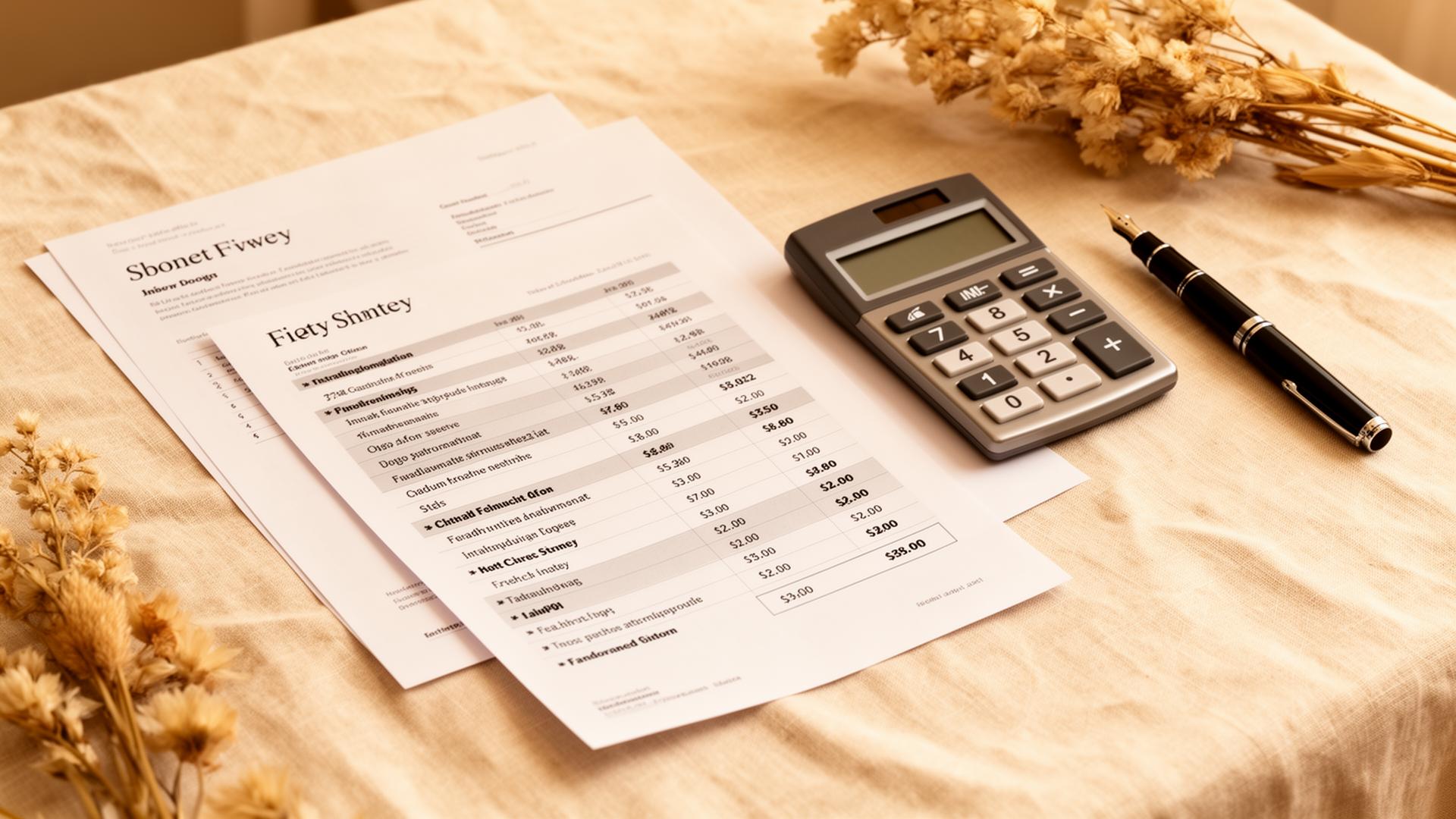
Pricing is the single highest-leverage decision a wedding content creator will make this year. Underprice and you burn out shooting 30 weddings for what 15 should pay. Overprice without the portfolio and inquiries stall for a season. This is the full pricing system — the math, the packages, the regional rates, the psychology, and the contract clauses that protect the margin once you've earned it. It's the same framework Aisle's top-booking creators use to clear six figures without working every Saturday from April to October.
Quick answer
- Price the job, not the day — a single wedding consumes 22 hours of real labor.
- Package pricing beats hourly. Build 6/8/10-hour tiers; the 8-hour is your anchor.
- Target a 50–65% net margin after gear, software, insurance, marketing, and your hourly wage.
- Publish a 'starting at' number on your site; gate the full PDF behind an inquiry form.
- Take a 30–50% non-refundable retainer. Final balance auto-bills 7–14 days out.
- Raise rates 15–25% when two of three Aisle Raise Rule triggers fire.
- Destination weddings carry a 30–60% premium plus full travel cost upfront.
- Lock margin with contract clauses — overtime rate, travel fee, weather, usage rights, late-pay penalty.
The Aisle Pricing Engine™
Most creators price by looking at what the person above them on Instagram charges and shaving 15% off. That's not pricing — that's guessing. The Aisle Pricing Engine™ is a five-input formula that produces a defensible floor price for every package you sell. Run it once, then re-run it every six months as your costs and portfolio change.
The formula
Floor price = (Target hourly × 22) + Gear depreciation per shoot + Overhead per shoot + (30% profit cushion)
Worked example — an emerging creator in Austin
| Input | Value | Source |
|---|---|---|
| Target hourly | $85 | Local market for skilled creative labor |
| Hours per wedding (true labor) | 22 | 2 inquiry calls + 10 shoot + 8 edit + 2 admin |
| Gear depreciation | $120 | $2,400/yr ÷ 20 weddings |
| Overhead per shoot | $180 | Software, insurance, marketing, hosting |
| Profit cushion (30%) | $648 | Buffer for slow months and reinvestment |
| Floor price | $2,818 | Round to $2,850 |
That $2,850 is the floor — never quote below it. The market price for this creator's tier in Austin is $2,200–$4,200, so they have permission to publish at $2,850 and quote $3,200 with confidence on inquiries that come with referrals.
2026 market rates
These are observed rates from creator-led pricing pages, wedding marketplaces, and Aisle's onboarding data across North America, Europe, and Australia. They represent the all-in package price (not hourly rates) for a full wedding-day shoot with same-night highlight and 24–72 hour delivery.
| Package | Hours | Average price | Premium metros |
|---|---|---|---|
| Half-day | 4–5 hr | $900–$1,800 | $1,800–$3,200 |
| Standard (anchor) | 6–8 hr | $1,800–$3,800 | $3,500–$6,500 |
| Full-day | 10 hr | $2,800–$5,500 | $5,000–$8,500 |
| Two-day (rehearsal + wedding) | 14–18 hr | $4,500–$8,000 | $8,000–$14,000 |
| Wedding weekend (welcome + wedding + brunch) | 20–28 hr | $7,000–$12,500 | $12,000–$22,000 |
Rates by experience tier
The single biggest pricing variable isn't location — it's portfolio depth. A creator with 30+ weddings on their reel commands 3–5× the rate of a creator with three. Use this as a reality check before pricing.
| Tier | Weddings shot | Standard package | What you should charge |
|---|---|---|---|
| Beginner | 0–5 | $800–$1,500 | Cover gear + your time; don't lose money |
| Emerging | 6–15 | $1,500–$2,500 | Profitable; reinvest in gear + marketing |
| Established | 16–40 | $2,500–$4,500 | Full-time sustainable |
| Premium | 40+ | $4,500–$7,500 | Selective booking, deep referral pipeline |
| Luxury | Top of market | $7,500–$12,000+ | Brand-driven, planner-referred only |
Rates by region
Geography matters less than it used to — destination bookings have flattened pricing — but the local cost of doing business still drives the floor. The biggest swing factor is whether you're competing against an established cohort of full-time wedding videographers or filling a gap no one else is filling.
| Market | Standard 8-hr package | Top-tier ceiling |
|---|---|---|
| NYC / LA / San Francisco | $3,500–$6,500 | $12,000+ |
| London / Paris / Sydney | $3,200–$6,000 | $10,000+ |
| Austin / Nashville / Denver / Toronto | $2,200–$4,200 | $7,500 |
| Mid-tier US metros (Charlotte, Phoenix, Portland) | $1,800–$3,500 | $6,000 |
| Secondary markets / rural | $1,200–$2,500 | $4,500 |
| Italy / Spain destination market | $3,500–$7,000 | $12,000+ |
| Mexico / Caribbean destination market | $2,800–$5,500 | $9,000 |
The real profit math
Most creators look at a $3,000 booking and think they made $3,000. The math actually looks like this for a mid-market 8-hour wedding:
| Line item | Amount |
|---|---|
| Gross package price | $3,000 |
| Card processing fee (Stripe 2.9% + $0.30) | −$87 |
| Gear depreciation (per shoot) | −$120 |
| Software + hosting (per shoot) | −$60 |
| Insurance + marketing allocation | −$120 |
| Travel (50-mile local trip) | −$80 |
| Second-shooter cost (if applicable) | −$600 |
| Net before tax | $1,933 |
| Self-employment + income tax (30%) | −$580 |
| Take-home per wedding | $1,353 |
At 22 hours of real labor, that's $61.50/hour in your pocket. If your target hourly was $85, you're $23.50/hour underwater on every shoot. That's how creators end the year exhausted with a respectable revenue number and no money in the bank. Run the math on every package before you publish a rate sheet.
Package architecture
A working creator menu has exactly three tiers: a starter that filters out tire-kickers, a standard that books 60–70% of inquiries, and a premium that anchors the price perception of the standard. Don't offer more than three — choice paralysis kills conversion.
Tier 1 — Half-day (the filter)
- 4–5 hours of continuous coverage
- 1 same-night highlight reel (30–45 sec)
- 2–3 edited reels delivered within 72 hours
- Online delivery gallery
- Priced at ~60% of standard — most couples upgrade after seeing inclusions
Tier 2 — Standard 8-hour (the anchor)
- 8 hours of continuous wedding-day coverage
- 1 same-night highlight reel (30–60 sec)
- 3–5 edited reels delivered within 72 hours
- 10–20 additional clips delivered within 2 weeks
- Online delivery gallery + 1-year hosting
Tier 3 — Premium 10-hour + (the anchor-setter)
- 10+ hours of coverage including pre-ceremony detail shots
- 1 same-night highlight + 1 next-day announcement reel
- 6–8 edited reels in 72 hours, 25+ clips in 2 weeks
- Raw footage included
- Second shooter for getting-ready coverage
- Priced 30–40% above standard — the existence of this tier doubles standard-tier conversions
High-margin add-ons
These six add-ons capture the highest attach rate from couples and the highest margin for creators — they're labor you're already doing or already on-site for.
| Add-on | Typical price | Attach rate | Margin |
|---|---|---|---|
| Raw footage | $300–$600 | 40–60% | ~95% |
| Second shooter | $700–$1,200 | 25–35% | ~40% |
| Rehearsal coverage (2 hr) | $400–$800 | 20–30% | ~70% |
| Drone footage | $300–$700 | 15–25% | ~80% |
| Same-day Story package | $400–$900 | 30–40% | ~85% |
| Day-after couples shoot | $500–$1,000 | 15–20% | ~75% |
| Rush delivery (24-hour reel) | $250–$500 | 20–30% | ~90% |
Aisle data: creators with a published add-on menu lift average booking value by 28% versus creators who only sell their core package.
Destination & travel pricing
Destination weddings are the most-misquoted package in the industry. The mistake is folding travel into the package price and hoping it averages out. The fix is line-item transparency.
The travel formula
- Base coverage rate — your standard 8 or 10-hour package
- Round-trip travel — billed at actual cost or +10% to cover booking time
- Accommodation — covered by the couple or invoiced at a $200–$350 per-diem
- Travel-day fee — $400–$800 per travel day (one for short-haul, two for international)
- Buffer day — required for international shoots; billed at travel-day rate
- 50% non-refundable retainer + full travel cost upfront
Net uplift versus a local wedding: typically 30–60%. For a $3,000 local package, a destination version lands at $4,200–$5,400 plus reimbursed flights and hotel.
Delivered before the last dance.
Aisle is the delivery platform built for wedding content creators — a storefront, same-day reel delivery, and a vendor referral loop, in one system.
Pricing psychology that books
Couples don't choose the cheapest creator — they choose the most confident one in their budget range. Five tactics that move conversion without lowering price:
- Anchor with the premium tier. When the menu opens with the $5,800 package, the $3,200 standard feels like the reasonable choice. This single change lifts standard-tier conversion 25–40%.
- Round to the meaningful digit. $2,850 reads as considered. $2,847 reads as desperate. $3,000 reads as round-number guessing. Land on $X,850 or $X,500.
- Lead with deliverables, not hours. "5 reels in 72 hours" is a tangible outcome. "8 hours of coverage" is an input. Couples don't buy inputs.
- Publish the inquiry response time. "Replies within 4 hours" on your site signals reliability and is a tie-breaker between you and three other quoted creators.
- Show one couple, not one reel. A single case-study page with the brief, the gallery, and a quote outperforms a feed of 12 reels at the inquiry stage.
Clauses that protect margin
Pricing without a contract is a wish. Every Aisle creator should ship a contract with these clauses — they're the difference between booked revenue and collected revenue.
- Non-refundable retainer — 30–50% to hold the date, never refundable past the cooling-off window
- Balance auto-pay — final balance auto-bills 7–14 days before the wedding via Stripe
- Overtime rate — $200–$400/hour beyond the contracted window, billed in 30-minute increments
- Travel structure — actual cost + per-diem + travel-day fee, paid upfront for destination
- Weather / force majeure — reschedule policy with one free move; second move at 30% of package price
- Usage rights — you retain copyright; couple gets unlimited personal use; commercial use requires separate license
- Late-payment penalty — 2% monthly on overdue balances
- Liability cap — total liability capped at the package price; this is the clause that prevents a $200K lawsuit over a lost SD card
- Delivery window — explicit 72-hour and 2-week delivery commitments with a discount schedule for missed deadlines
When (and how) to raise rates
The Aisle Raise Rule: two of three signals trigger a 15–25% increase on new inquiries:
- You're closing more than 60% of the inquiries you quote.
- You're booked more than three months out.
- Your most recent five deliveries are visibly better than the work on your site.
The 6-step raise rollout
- Refresh your portfolio first. Three new case studies live before you raise.
- Update your rate sheet PDF the same day the new pricing goes live.
- Update your website starting-at number within 24 hours of the rate sheet.
- Honor outstanding quotes for 30 days at the old rate.
- Email your planner network with the new number, the effective date, and one-line proof of why (booked-out, new deliverable, awards).
- Run the increase for 60 days before evaluating — short-term inquiry dips are normal and self-correct.
9 pricing mistakes to avoid
- Pricing the day, not the job. An 8-hour wedding is 22 hours of labor. Price the full job.
- No starting-at on the website. Forces every inquiry through a manual quote and loses high-intent couples to faster competitors.
- Hourly pricing. Creates overtime arguments and trains couples to think of you as a vendor, not a creative.
- Refundable retainers. One cancellation a quarter wipes out a month of profit.
- No overtime rate. The wedding runs an hour long, you don't get paid, and you've trained the couple that your time is free.
- Withholding raws entirely. Creates friction at the post-delivery stage. Sell them as an add-on instead.
- Matching the cheapest local creator. Race to the bottom. You'll lose every time to whoever is willing to lose more money.
- Folding destination travel into the package. Hides cost from the couple and from you. Always line-item travel.
- Waiting to raise rates. The cost of an under-priced year is much higher than the cost of a few lost inquiries.
90-day pricing rollout
If you take only one thing from this guide, run this 90-day plan to ship a new pricing system end-to-end.
Days 1–30 — Calculate
- Run the Aisle Pricing Engine™ for your three packages
- Audit last year's wins/losses on quote-to-book ratio
- Write the new rate sheet (3 packages + 6 add-ons)
- Update your contract template with the protective clauses
Days 31–60 — Ship
- Publish starting-at on the website
- Replace inquiry form with date + venue + add-on fields
- Send the rate sheet PDF to your last 12 couples for benchmark feedback
- Email planners with the new structure
Days 61–90 — Measure
- Track quote-to-book ratio weekly (target 50–65%)
- Track average booking value (target +15% vs prior year)
- Track add-on attach rate (target 1.4 add-ons per booking)
- Adjust the standard tier by ±10% if conversion is outside the target band
Delivered before the last dance.
Aisle is the delivery platform built for wedding content creators — a storefront, same-day reel delivery, and a vendor referral loop, in one system.
Frequently asked questions
What is the average price of a wedding content creator in 2026?
In major US and European markets, the average 8-hour wedding content creator package runs $1,800–$3,800. Premium metros (NYC, LA, London, Sydney) average $3,500–$6,500. New creators with limited portfolios start at $800–$1,500. Top-tier, planner-referred creators charge $7,500–$12,000+. These figures cover the wedding-day shoot plus a same-night highlight reel and 24–72 hour deliverables.
How do I price myself if I've only shot a few weddings?
Run The Aisle Pricing Engine™: (Target hourly rate × 22 hours of true labor) + (gear depreciation per shoot) + (overhead per shoot) + 30% profit margin. For most new creators that lands between $1,100 and $1,800. Don't price below your floor to 'get experience' — work two or three weddings at cost as a second shooter instead, then launch at your real rate.
Should I price hourly or by package?
Package pricing wins every time. Couples want to compare apples to apples, planners want one number to quote, and hourly rates create awkward overtime conversations on the wedding night. Build 6, 8, and 10-hour packages anchored on an 8-hour 'standard,' then publish an overtime rate ($200–$400/hr) for anything past the contracted window.
How much should I charge for raw footage?
Either include it by default in your top-tier package or sell it as a $300–$600 add-on. Don't withhold raws entirely — couples will ask, and refusing creates friction that loses bookings. The exception: if your edit style is your brand, position raws as a premium upgrade ($500–$900) with a clear no-repost clause.
How do I price a destination wedding?
Base coverage rate + round-trip travel at actual cost + per-night accommodation (covered by the couple or invoiced at a flat per-diem) + a travel-day fee of $400–$800 per travel day. For international, add a visa/buffer day. Total destination uplift is typically 30–60% on top of your local 8-hour rate, and you should require a 50% non-refundable retainer plus full travel cost upfront.
When should I raise my rates?
The Aisle Raise Rule: two of these three signals trigger a 15–25% increase on new inquiries — (1) you're closing more than 60% of quotes, (2) you're booked more than 3 months out, (3) your last five deliveries are visibly better than the work on your site. Raise on new inquiries only — never retroactively on signed contracts.
Do I charge sales tax on wedding content creation?
It depends on your state or country. In the US, most states tax tangible deliverables (USBs, prints); digital-only delivery is taxed in some states and exempt in others. Check your state department of revenue and your destination state if delivering across state lines. When in doubt, ask a CPA who works with creative businesses — get this wrong and you owe back-tax plus penalties.
What deposit should I require?
Industry standard is 30–50% non-refundable retainer to hold the date, balance due 7–14 days before the wedding. Aisle creators average 40% upfront. Never accept final payment on the wedding day — chasing payment while you're shooting (or after delivery) is a margin killer. Auto-bill the balance via Stripe two weeks out.
How much profit should I make per wedding?
Target a 50–65% net margin after gear depreciation, software, insurance, marketing, and a true hourly wage for your shoot and edit time. If a $2,500 package nets you less than $1,250 in your pocket after costs, you're underpriced. The Aisle Pricing Engine™ builds a 30% profit cushion into every package so the margin survives a slow month.
How do I justify a price increase to existing planners and referrals?
Lead with three proof points: a portfolio refresh, a published rate sheet, and a results metric ('my couples' reels averaged 240K views in 2025'). Send a one-paragraph email three months before the new rate kicks in, honor old rates for already-quoted inquiries, and offer planners a kickback or first-look booking window on the new pricing.
Should I publish my pricing on my website?
Publish a starting-at number plus your package inclusions; gate the full PDF behind an inquiry form. Starting-at filters out tire-kickers and signals confidence; the inquiry form gives you a chance to qualify the date, venue, and add-ons before quoting. Creators with no price on their site lose 30–40% of high-intent inquiries to faster-quoting competitors.
How do I price a second shooter or assistant?
Pay a second shooter $400–$800 for an 8-hour wedding ($50–$100/hr), bill the couple $700–$1,200 for the same coverage. The spread covers your scheduling, training, and gear lending. Never bill at your second shooter's cost — you are the brand on the line, and the markup pays for that liability.
Questions, answered.
- What is the average price of a wedding content creator in 2026?
- In major US and European markets, the average 8-hour wedding content creator package runs $1,800–$3,800. Premium metros (NYC, LA, London, Sydney) average $3,500–$6,500. New creators with limited portfolios start at $800–$1,500. Top-tier, planner-referred creators charge $7,500–$12,000+. These figures cover the wedding-day shoot plus a same-night highlight reel and 24–72 hour deliverables.
- How do I price myself if I've only shot a few weddings?
- Run The Aisle Pricing Engine™: (Target hourly rate × 22 hours of true labor) + (gear depreciation per shoot) + (overhead per shoot) + 30% profit margin. For most new creators that lands between $1,100 and $1,800. Don't price below your floor to 'get experience' — work two or three weddings at cost as a second shooter instead, then launch at your real rate.
- Should I price hourly or by package?
- Package pricing wins every time. Couples want to compare apples to apples, planners want one number to quote, and hourly rates create awkward overtime conversations on the wedding night. Build 6, 8, and 10-hour packages anchored on an 8-hour 'standard,' then publish an overtime rate ($200–$400/hr) for anything past the contracted window.
- How much should I charge for raw footage?
- Either include it by default in your top-tier package or sell it as a $300–$600 add-on. Don't withhold raws entirely — couples will ask, and refusing creates friction that loses bookings. The exception: if your edit style is your brand, position raws as a premium upgrade ($500–$900) with a clear no-repost clause.
- How do I price a destination wedding?
- Base coverage rate + round-trip travel at actual cost + per-night accommodation (covered by the couple or invoiced at a flat per-diem) + a travel-day fee of $400–$800 per travel day. For international, add a visa/buffer day. Total destination uplift is typically 30–60% on top of your local 8-hour rate, and you should require a 50% non-refundable retainer plus full travel cost upfront.
- When should I raise my rates?
- The Aisle Raise Rule: two of these three signals trigger a 15–25% increase on new inquiries — (1) you're closing more than 60% of quotes, (2) you're booked more than 3 months out, (3) your last five deliveries are visibly better than the work on your site. Raise on new inquiries only — never retroactively on signed contracts.
- Do I charge sales tax on wedding content creation?
- It depends on your state or country. In the US, most states tax tangible deliverables (USBs, prints); digital-only delivery is taxed in some states and exempt in others. Check your state department of revenue and your destination state if delivering across state lines. When in doubt, ask a CPA who works with creative businesses — get this wrong and you owe back-tax plus penalties.
- What deposit should I require?
- Industry standard is 30–50% non-refundable retainer to hold the date, balance due 7–14 days before the wedding. Aisle creators average 40% upfront. Never accept final payment on the wedding day — chasing payment while you're shooting (or after delivery) is a margin killer. Auto-bill the balance via Stripe two weeks out.
- How much profit should I make per wedding?
- Target a 50–65% net margin after gear depreciation, software, insurance, marketing, and a true hourly wage for your shoot and edit time. If a $2,500 package nets you less than $1,250 in your pocket after costs, you're underpriced. The Aisle Pricing Engine™ builds a 30% profit cushion into every package so the margin survives a slow month.
- How do I justify a price increase to existing planners and referrals?
- Lead with three proof points: a portfolio refresh, a published rate sheet, and a results metric ('my couples' reels averaged 240K views in 2025'). Send a one-paragraph email three months before the new rate kicks in, honor old rates for already-quoted inquiries, and offer planners a kickback or first-look booking window on the new pricing.
- Should I publish my pricing on my website?
- Publish a starting-at number plus your package inclusions; gate the full PDF behind an inquiry form. Starting-at filters out tire-kickers and signals confidence; the inquiry form gives you a chance to qualify the date, venue, and add-ons before quoting. Creators with no price on their site lose 30–40% of high-intent inquiries to faster-quoting competitors.
- How do I price a second shooter or assistant?
- Pay a second shooter $400–$800 for an 8-hour wedding ($50–$100/hr), bill the couple $700–$1,200 for the same coverage. The spread covers your scheduling, training, and gear lending. Never bill at your second shooter's cost — you are the brand on the line, and the markup pays for that liability.
Delivered before the last dance.
Aisle is the delivery platform built for wedding content creators — a storefront, same-day reel delivery, and a vendor referral loop, in one system.
Get the Aisle Creator Brief.
The weekly newsletter for wedding content creators — pricing benchmarks, day-of workflows, and the tactics that book out studios. Free.
One email a week. Unsubscribe in a click.
More from the Knowledge Library.
What Is a Wedding Content Creator? The 2026 Definitive Guide
Wedding content creators capture vertical, social-ready footage and deliver it same-day. Here's what they do, what they cost, and how they fit alongside your photographer and videographer.

How to Start a Wedding Content Creator Business (2026 Playbook)
The complete operating plan — positioning, pricing, packaging, gear, contracts, delivery workflow, and the first 90 days of bookings — for launching a profitable wedding content creator business.

Is a Wedding Content Creator Worth It? An Honest Breakdown
When the spend pays off, when it doesn't, and the four questions to ask before adding a content creator to your wedding lineup.
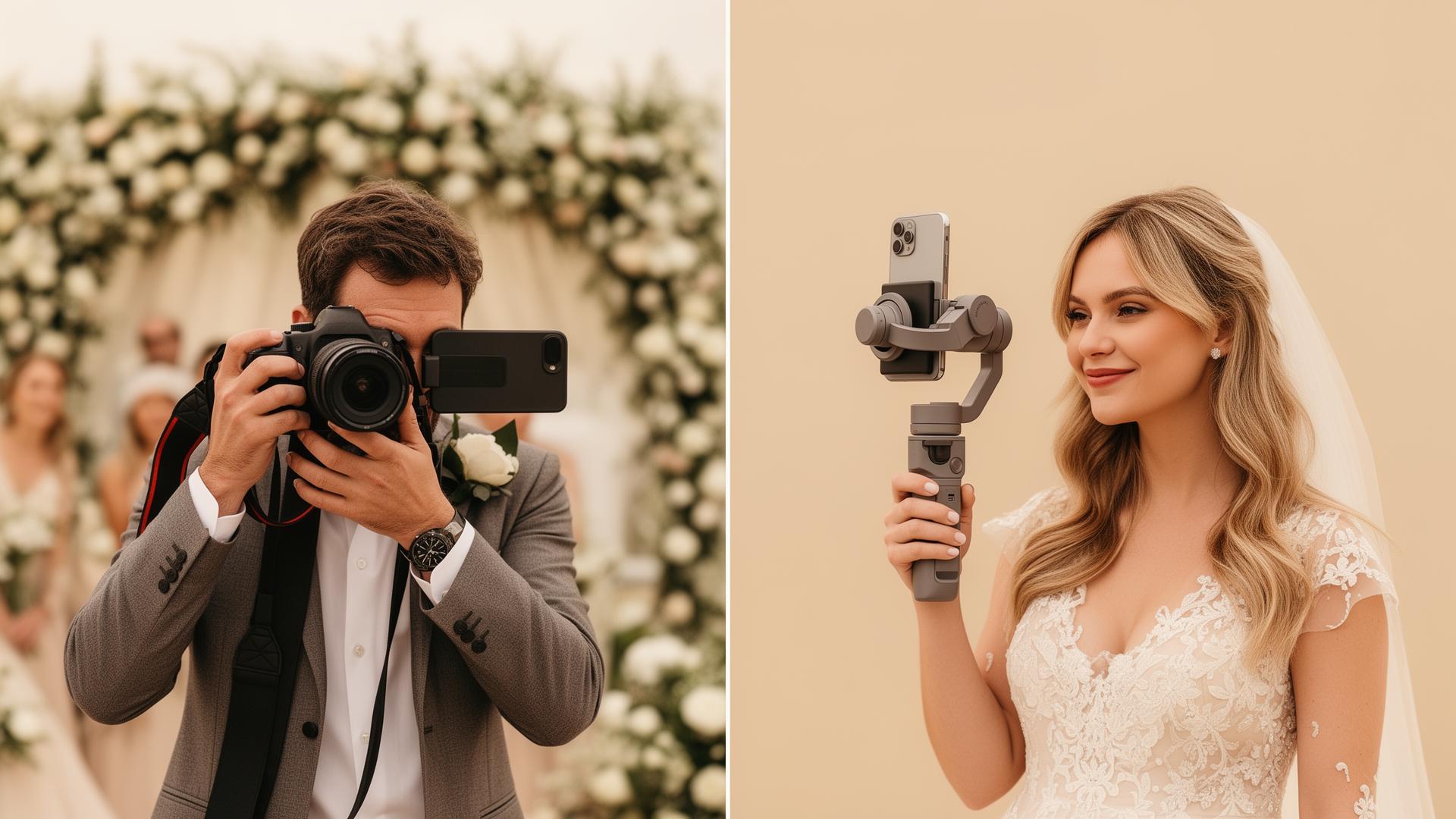
Wedding Content Creator vs Photographer: The Real Difference
Different gear, different output, different timeline. Why most modern weddings hire both — and where each role begins and ends.