How to Start a Wedding Content Creator Business (2026 Playbook)
The complete operating plan — positioning, pricing, packaging, gear, contracts, delivery workflow, and the first 90 days of bookings — for launching a profitable wedding content creator business.

Wedding content creation is the fastest-growing service category in the wedding industry — and it is the easiest legitimate creative business to start in 2026. The gear is iPhone-first, the deliverable format is already on every couple's phone, and demand is outpacing supply in nearly every US, UK, EU, and Australian market. This is the operating plan: positioning, pricing, gear, contracts, delivery workflow, and the exact path to your first 10 paid weddings. Not theory — what working creators actually do.
Quick answer
Why now is the moment to start
Three shifts make this the highest-leverage moment in the category's short history.
- Couples now budget for it. In 2022 a wedding content creator was a novelty line item. In 2026 it is a planned category, sitting at 15–25% of the videography budget on most $50K+ weddings.
- The gear caught up. The iPhone 16 and 17 Pro, combined with a $250 gimbal and a $300 wireless mic, produces output that crosses the quality threshold couples are willing to pay $3,000+ for.
- The professional pool is still tiny. Most US metros have fewer than 30 full-time wedding content creators serving thousands of weddings per year. The bottleneck is supply, not demand.
- Startup cost: $1,500–$3,500 for gear, business formation, insurance, and a portfolio shoot.
- Realistic year-one: 10–15 weddings at $1,800–$2,800 average = $20K–$40K gross.
- Realistic year-two: 25–35 weddings at $2,800–$3,800 average = $80K–$130K gross.
- Same-day delivery is now table stakes at the $3,000+ tier.
- Vendor referral loops outperform paid ads at every stage of growth.
- Underpricing the first 15 weddings is the #1 business-killing mistake.
The Aisle Launch Framework™
Every working wedding content creator we've onboarded got the business off the ground using some version of these seven moves, in roughly this order. Skip a step and the business stalls; nail all seven and you'll be booked out within a year.
| Step | Move | Outcome | Time |
|---|---|---|---|
| 1 | Positioning | A defensible niche and brand voice | 1 week |
| 2 | Offer & pricing | 3-tier package menu with published prices | 1 week |
| 3 | Minimum viable gear | iPhone-first kit, $1,200–$2,000 | 1 week |
| 4 | Portfolio | 3–5 deliverable case studies | 30 days |
| 5 | Legal & insurance | LLC, $1M COI, signed contract template | 2 weeks |
| 6 | Delivery workflow | Same-night reel + 72-hour edit pipeline | 2 weeks |
| 7 | First 10 bookings | 10 paid weddings on the calendar | 60–90 days |
Step 1: Lock in your positioning
Positioning is the only step that has nothing to do with cameras and everything to do with whether anyone hires you. The new creators who get traction in their first 90 days all do the same thing: they pick a defensible angle and let everything else (Instagram bio, package names, pricing tiers, content style) flow from it.
Strong positioning angles for new creators in 2026:
- Editorial / fashion-forward. Cinematic, slow, golden-hour, tonal grading. Wins luxury venue couples and high-end planner referrals.
- Documentary / candid. Guest-perspective, no posing, all real moments. Wins couples burnt out by the traditional photo experience.
- Cultural / multicultural specialist. South Asian, Persian, Nigerian, Greek, Latin. Hugely underserved markets with premium pricing tolerance.
- Multi-day events. Mehndi, sangeet, welcome dinner, brunch. Doubles your average ticket and removes most competition.
- Speed-first. Same-day delivery as the lead promise. Wins socially active couples and out-of-town family weddings.
- City specialist. Owning the search for your city plus a venue cluster (e.g. "DTLA loft weddings," "Brooklyn warehouse weddings").
Pick one. You can broaden later. Trying to be the generalist content creator for "all wedding styles" is what 80% of failed launches do.
Step 2: Build a 3-tier offer and price it
The first thing a planner, photographer, or referral source asks when they hear about you is "What do they cost?" If you can answer in one screenshot, you get the referral. If you say "depends on scope, let me send a quote" you don't.
The 3-tier offer that works for new creators:
| Tier | Coverage | Deliverables | Price (intro) | Price (booked) |
|---|---|---|---|---|
| Essentials | 6 hr | 2 reels (72 hr), 8–10 clips (2 wk) | $1,500 | $2,200 |
| Signature | 8 hr | Same-night reel + 3–5 reels (72 hr), 15 clips, gallery | $2,200 | $3,200 |
| Premium | 10 hr | Same-night reel + 5–7 reels (72 hr), 20+ clips, raws | $3,200 | $4,800 |
Hold intro pricing for the first 5–8 weddings. Then re-price. Most creators delay re-pricing by 6 months and leave $15K–$25K of first-year revenue on the table.
For the full pricing breakdown — including the math behind a profitable day rate — see our wedding content creator pricing guide.
Step 3: Assemble the minimum viable gear kit
Do not buy a $4,000 mirrorless rig to start. The working professional kit in 2026 is iPhone-first and costs under $2,000.
| Item | Purpose | Spec | Cost |
|---|---|---|---|
| Primary camera | All day-of capture | iPhone 16 Pro or 17 Pro | $1,099+ |
| Gimbal | Stabilized walking, ceremony, dance floor | DJI Osmo Mobile 7P | $169 |
| Wireless mic | Vows, toasts, ambient audio | DJI Mic 2 (2-person kit) | $329 |
| ND filter kit | Harsh midday outdoor light | Moment VND or Tiffen iPhone kit | $79–$149 |
| Storage | Day-of backups, raw transfer | 2× Samsung T7 1TB SSD | $190 |
| Power | All-day battery | 2× Anker 20K mAh + MagSafe | $120 |
| LED panel | Low-light reception coverage | Aputure MC or Lume Cube Panel Mini | $90–$160 |
| Editing | Same-night + 72-hour edits | CapCut Pro + Premiere Pro | $10–$23/mo |
Full kit and add-on guidance: wedding content creator equipment guide.
Step 4: Build a portfolio in 30 days
You cannot book paid weddings with no portfolio. You can build a portfolio in 30 days using these five plays:
- Two styled shoots. Partner with a local florist, stylist, and venue. They get content for their portfolios; you get yours. Cost: $0–$300 for catering and a model couple.
- Two friends-and-family weddings. Offer at cost ($400–$600) in exchange for full delivery rights and a written testimonial.
- One second-shooter day. Reach out to 10 working creators in your city. Offer to second-shoot for free in exchange for delivery rights to your B-roll.
- One vendor party or open house. Most venues host quarterly vendor mixers. Show up with your kit, shoot the night, deliver same-day. Instant referral network.
- One self-shoot reel. A 60-second cinematic walk- through of a venue you want to shoot. Tag the venue. They share it. Couples DM you.
Delivered before the last dance.
Aisle is the delivery platform built for wedding content creators — a storefront, same-day reel delivery, and a vendor referral loop, in one system.
Step 5: Form the business, get insured, lock the contract
Do this before your first paid booking — not after. The two-week version:
- Form an LLC. Use your state's Secretary of State website or a $99 service like Northwest Registered Agent. Takes 1–2 weeks.
- EIN from the IRS. Free, 10 minutes online at irs.gov.
- Business bank account. Mercury or Relay for free online accounts; your local bank if you prefer a relationship.
- $1M general liability + equipment insurance. Thimble, Hiscox, or Full Frame. Total cost: $400–$1,000/year. Most venues require COIs on demand.
- Sign a contract template. Use a wedding content-creator-specific template (not a generic photo contract). Cover deliverables, payment schedule, weather, sick contingency, overtime, usage rights, raw footage, cancellation, force majeure.
- Sales tax permit. Register in your home state if required. CPA consultation in year one ($150–$300) is worth it.
Full contract clause-by-clause breakdown: wedding content creator contract guide.
Step 6: Set up the same-day delivery workflow
The thing that separates a $1,500 wedding creator from a $4,000 one is not gear and not editing skill — it is workflow. Specifically, the ability to deliver a polished highlight reel before the reception ends and a full gallery within 72 hours. Build the workflow once; reuse it for every wedding.
The non-negotiable same-day delivery stack:
- iPhone → SSD backup hourly during the day-of so nothing lives on one device.
- Pre-built CapCut or Premiere template with your intro card, color grade, and outro. You drop clips in; you don't design every reel from scratch.
- Pre-saved trending audio library. 10–20 audios you've vetted in the week before the wedding so you're not scrolling at 1 AM.
- A delivery portal where the couple, their family, and the other vendors can view, download, and reshare clips from a single branded link — not a Dropbox folder, not WeTransfer. This is what Aisle was built for.
- A vendor referral push. When you deliver, the photographer, planner, florist, DJ, and venue all get a tagged link to the clips they're in. Every delivery becomes next year's referral pipeline.
Step 7: Land your first 10 paid bookings
Three channels do 90% of the work in your first 90 days.
Channel 1: Wedding planners. Email or DM 25 local planners with a 60-second portfolio reel, your published pricing, and a one-line pitch ("Same-day reels, social-ready, planner- friendly turnaround"). Expect a 10–20% response rate and 2–5 referral relationships from the first round.
Channel 2: Photographers. Photographers refer when their couples want vertical content and they don't shoot it. Reach out to 20–30 photographers in your style range. Offer to co-book and share the planner referral loop.
Channel 3: Public portfolio + paid social. Publish a portfolio page with full delivery samples (not just hero reels) and your pricing tiers. Run a $150–$300/month Instagram Reels and TikTok cadence targeting your city's wedding hashtags. Expect 3–8 direct inquiries/month after 60 days of consistent posting.
Don't run cold paid ads at this stage. The CAC math is brutal until you've crossed 15+ weddings and have organic case studies to fuel the creative.
Three creator launches
Beginner: Maya, Austin, TX — month 4
Maya left a marketing job in March, bought an iPhone 16 Pro + DJI kit ($1,800), shot 3 styled shoots and 2 friends-and-family weddings (gross $1,400), and signed her first 4 paid weddings at $1,900 each. Year-one target: 14 weddings at an average $2,300. Projected: $32K gross, full time from month 9.
Intermediate: Daniel, Brooklyn, NY — year 2
Daniel started in 2024 as a side hustle while waiting tables. Shot 12 weddings year one at $2,200 average ($26K). Year two: re- priced to $3,400, partnered with 6 Brooklyn planners, shot 22 weddings ($75K), went full time at month 14. Year three target: 30 weddings at $4,200 average = $126K.
Advanced: Priya, Los Angeles — year 4
Priya niched into South Asian multi-day weddings in year two. Average ticket: $7,800 for 2-day packages, $14,500 for 3-day events. Shoots 24 events per year, grosses $215K, runs a 2-person studio with one associate creator and quarterly contract editors.
Recommended tools
| Purpose | Tool | Why | Best for |
|---|---|---|---|
| Delivery & client portal | Aisle | Same-day branded gallery, vendor referral loop, mobile-first | Every wedding |
| Same-night editing | CapCut Pro | Fastest vertical-edit workflow with template reuse | Highlight reel |
| Cinematic editing | Adobe Premiere Pro | Color grading, deeper audio control, multi-cam | Premium tier reels |
| Contracts & invoicing | HoneyBook or Dubsado | One platform for contract, deposit, invoice, scheduling | Inquiry to payment |
| Business banking | Mercury or Relay | Free, no minimums, modern UI | LLC accounts |
| Insurance | Thimble or Full Frame | Same-day COI generation, creator-specific policies | Every venue booking |
| Accounting | Wave (free) or Bench | Bookkeeping + tax prep without a $2K CPA bill | Year one |
| Trending audio research | Trendpop or in-app TikTok | Surface peaking audios before they saturate | Weekly |
12 mistakes that kill new wedding content creator businesses
- Underpricing the first 15 weddings. You anchor your referral network and yourself at a price you'll spend a year escaping.
- No published pricing. Planners can't refer you if they have to ask. "Custom quote" is what generalist photographers say.
- Buying a $4,000 mirrorless before booking a wedding. The kit doesn't make the work. You need the work to justify the kit.
- Trying to be the creator for "all wedding styles." Generalists rank for nothing. Specialists get planner referrals.
- No contract. Or a generic photographer contract that doesn't cover same-day delivery, overtime, or weather.
- Delivering on Dropbox or WeTransfer. Looks amateur, kills referrals, and gives you no vendor distribution.
- Skipping insurance. One $1.2M COI requirement two weeks out and you lose the booking — or worse, get sued.
- Mixing personal and business bank accounts. Collapses LLC protection, ruins bookkeeping, triggers audits.
- Not building the same-day workflow before booking #1. You'll learn it the hard way at 2 AM with the couple texting.
- Posting hero reels only, not full delivery samples. Planners and savvy couples want to see what they actually get.
- Going full time before 10 confirmed bookings. Side hustle until the cash flow is undeniable.
- No vendor referral loop. Every wedding should generate 3–5 vendor follow-ups. If yours don't, you're leaving 80% of organic growth on the table.
Advanced strategies (year 2 and beyond)
- Productize your add-ons. Same-Day Story ($600), Drone ($400), Rehearsal Coverage ($800), Multi-Day ($2,800/day). Easier to upsell than to negotiate.
- Run a quarterly venue tour. Pick 4 venues per quarter, shoot a portfolio piece at each, gift it to the venue. Inclusion on the preferred-vendor list is 10–20 bookings a year.
- Build a planner partnership program. 10% revenue share to planners on inbound bookings. Tracked via Aisle's referral attribution or a shared spreadsheet.
- Hire your first associate creator at year 2. Pay $800–$1,200/wedding plus mileage. You take the booking, the referral relationships, and the brand equity.
- Multi-day packages. The fastest path to a $150K+ year is doubling your average ticket via multi-day events (South Asian, Persian, Nigerian, destination).
- Annual rate increases. Raise prices 10–15% every January. Grandfathered couples don't churn; new couples don't notice.
The 30 / 60 / 90 day action plan
Days 1–30: Foundation
- Pick your positioning and write a one-sentence pitch.
- Buy the minimum viable gear kit.
- Form the LLC, open the business bank account, get insured.
- Draft your 3-tier package menu with intro pricing.
- Sign a contract template you're willing to live with for a year.
- Shoot 2 styled shoots and 2 friends-and-family weddings.
- Set up your delivery portal and same-day editing workflow.
- Publish a public portfolio page with samples and prices.
Days 31–60: Booking
- Email 25 wedding planners with portfolio + pricing.
- DM 20 photographers about co-booking.
- Run a $150–$300 Instagram Reels and TikTok cadence.
- Attend at least one venue open house or vendor mixer.
- Book your first 3–5 paid weddings at intro pricing.
- Deliver the first wedding using the full same-day workflow.
- Trigger the vendor referral loop on every delivery.
Days 61–90: Re-price & systematize
- Re-price after the 5th–8th paid wedding (intro tier → booked tier).
- Refine the package menu based on what couples actually ask for.
- Add your first paid add-on (Same-Day Story is the highest-ROI).
- Codify your delivery SOP into a shareable doc.
- Lock in 2–3 long-term planner partnerships.
- Set the year-one booking target (10–15 weddings).
- Plan the year-two repositioning to the $3,000+ tier.
Delivered before the last dance.
Aisle is the delivery platform built for wedding content creators — a storefront, same-day reel delivery, and a vendor referral loop, in one system.
Templates & checklists worth bookmarking
- Pre-wedding client questionnaire. 12 questions covering timeline, key moments, family dynamics, must-have shots, Instagram handles, audio preferences, and the do-not-share list.
- Day-of timeline template. Block-by-block schedule mapped to deliverables (getting-ready clip, first-look reel, ceremony, portraits, cocktail, reception entrance, toasts, first dance, party).
- Gear checklist. A pre-departure tick-list you run the morning of every wedding so nothing is forgotten.
- Delivery SOP. The 8-step workflow from last-clip-captured to final-link-sent. Standardizes turnaround and onboards future associates in days, not weeks.
- Vendor referral message template. The exact message you send to planners, photographers, florists, DJs, and venues with the link to the clips they're in.
- Inquiry-to-booking email sequence. Five emails from "Thanks for reaching out" to "Contract signed" with published timelines so couples never wonder where they are in the process.
Frequently asked questions
How much money do I need to start a wedding content creator business?
You can start a wedding content creator business for $1,500–$3,500 in 2026. The core kit (iPhone 16 Pro or recent Pro model, DJI Osmo Mobile gimbal, DJI Mic 2 wireless lavalier, ND filter kit, two extra batteries, two storage cards or SSDs) runs $1,200–$2,000. The rest covers business formation ($150–$500), a one-year general liability policy ($350–$600), a contract template, an editing app subscription, and your portfolio shoot costs.
How much do wedding content creators charge starting out?
New wedding content creators typically charge $1,200–$2,200 for their first 5–10 weddings to build a portfolio, then move to $2,200–$3,500 for a standard 8-hour package by booking 12–15. Premium markets (NYC, LA, London) often skip the introductory tier and start at $2,500–$3,500. Pricing scales with portfolio depth, turnaround speed, and the breadth of deliverables — not just years in business.
Do I need an LLC to start a wedding content creator business?
In most US states, yes — once you've booked your first paid wedding. An LLC takes 1–2 weeks to form, costs $50–$500 depending on state, and separates your personal assets from any business liability. Sole proprietorship is technically allowed but leaves you personally exposed if a venue sues over a missed deliverable, lost footage, or an injury claim.
What insurance does a wedding content creator need?
Two policies: a $1M general liability policy ($350–$600/year) and equipment coverage ($150–$400/year). Most signature wedding venues require a Certificate of Insurance (COI) naming them as additionally insured 2 weeks before the event. Providers like Thimble, Hiscox, and Full Frame Insurance issue creator-friendly policies with same-day COI generation.
Can I start a wedding content creator business with just an iPhone?
Yes — and the working professional kit is iPhone-first in 2026. An iPhone 16 Pro or 17 Pro with a gimbal, wireless lavalier, and ND filters produces wedding content indistinguishable from a $4,000 mirrorless setup in most lighting conditions. Mirrorless or cinema cameras become useful at the premium tier, where low-light reception coverage and editorial-grade B-roll justify the upgrade.
How do I get my first wedding content creator clients?
Three channels work for new creators: (1) Offer 3–5 styled shoots or friends-and-family weddings at cost to build a portfolio. (2) Partner with 5–10 local wedding planners and photographers as referral sources. (3) Publish your full delivery samples and pricing on a public portfolio link, then run a $150–$300/month Instagram + TikTok content cadence targeting your city's wedding hashtags. Most new creators book their first 5 weddings within 60–90 days using this combo.
Do I need a separate brand or can I freelance under my name?
Either works for the first 5–10 weddings. A studio brand (e.g. "North Light Co.") tends to outperform a personal name on pricing, referrals from planners, and venue inclusion lists because it signals professionalism. The brand also makes future hiring of second shooters or associate creators frictionless. Switch the day you book your first $3,000+ wedding.
How long does it take to make wedding content creation full time?
Most creators replace a $60K–$80K salary within 18–24 months of starting, working 25–35 weddings per year at an average $2,800–$3,500 per wedding. The first 12 months typically generate $15K–$35K (10–15 weddings while building portfolio and referrals). The growth lever is operational — same-day delivery, vendor referral loops, and a productized package menu, not raw hours worked.
How fast should I deliver wedding content to clients?
The 2026 industry standard is a same-night highlight reel within 12 hours of the reception ending, 3–5 polished vertical reels within 72 hours, 10–20 additional clips within 2 weeks, and raw footage (if included) within 30–90 days. Anything slower than 2 weeks for the full edit is below market — and same-night delivery is now table stakes for the $3,000+ tier.
What contracts do I need for wedding content creator clients?
A single signed wedding content creator service agreement covering: scope of coverage (hours, locations), deliverables (reel counts, turnaround windows, format), payment schedule (typically 30–50% deposit, balance 7–14 days before wedding), cancellation and weather policy, overtime rate, usage rights, raw footage handling, sick or emergency contingency, and a force majeure clause. Tools like HoneyBook, Dubsado, or a Google Doc template work fine — the clauses matter, not the platform.
Do I need to register for sales tax as a wedding content creator?
Depends on state. In states like New York, Texas, and Florida, photography and videography services are generally sales-taxable; digital deliverables often are too. In California, services-only deliverables are typically exempt but tangible add-ons (USB drives, prints) are taxable. Register for a sales tax permit in your home state and any state where you regularly shoot. A CPA consultation ($150–$300) in your first year pays for itself.
Should I hire a second shooter when I start out?
Not for the first 8–12 weddings. A second shooter is a $400–$800 per-wedding cost that's only justified by weddings over 200 guests, multi-location getting-ready, or sprawling venues. Until you're booking $3,000+ packages with confidence, solo-shoot every wedding — it forces you to build the editorial eye and timeline mastery that separates working creators from hobbyists.
How do wedding content creators find weddings to shoot?
Once past the portfolio phase, the top channels are: (1) direct inquiries from a public portfolio link, (2) wedding planner referrals, (3) photographer co-bookings (photographers refer when the couple wants vertical content), (4) venue preferred-vendor lists, (5) Instagram and TikTok content reach, and (6) a vendor referral loop where every wedding you deliver gets shared back to the other vendors on the day. The last one — vendor links — is the highest-leverage channel and what separates fast-growing creators from stalled ones.
How many weddings should a beginner wedding content creator book per year?
Realistic targets: year one — 10–15 weddings, year two — 20–28 weddings, year three — 30–40 weddings if going full time, capped at 35–45 weddings per year per solo creator before quality and turnaround degrade. Going past 45 requires hiring or a studio model. Most working creators settle around 28–35 weddings per year at $3,000–$4,500 average ticket — a sustainable six-figure business.
What's the biggest mistake new wedding content creators make?
Underpricing the first year and never recovering. A creator who books their first 15 weddings at $1,200 anchors their referral network — and their own confidence — at that price. Re-pricing to $3,000 then requires either rebuilding the referral pipeline or losing past clients. Start the introductory tier at $1,800–$2,200, hold it for the first 5–8 weddings only, then move decisively to $2,800–$3,500 by your 12th booking.
Do I need a business bank account as a wedding content creator?
Yes, the day you form an LLC. Mixing wedding income with personal funds collapses your liability protection and creates a tax-prep nightmare. Open a free business checking (Mercury, Relay, or your local bank), route every booking deposit through it, and pay every business expense from it. This single step saves 10+ hours of bookkeeping per quarter and protects your LLC shield in any future dispute.
How do I handle weather, sick days, or canceled weddings as a new creator?
Three contract clauses: (1) weather — outdoor ceremonies move indoors or shift hours, no refund, no rescheduling. (2) Creator sick or emergency — you'll provide a named backup creator from your network at the same rate, or refund the deposit and release the date. (3) Couple cancels — retainer is non-refundable; if cancellation is 60+ days out, 50% of the balance is forgiven; under 30 days, full balance is due. Spell these out in writing — most disputes come from creators who hand-waved this conversation.
Is wedding content creation oversaturated in 2026?
No — demand still outpaces supply in most US, UK, EU, and Australian markets. The category is 4 years old as a defined service line, couples are now actively budgeting for it (15–25% of wedding videography budgets in 2026 are content creator allocations), and the working professional pool is small. The risk isn't saturation — it's commoditization at the bottom of the market. Position above the $2,500 floor and saturation is not your problem.
Key takeaways
- Wedding content creation is the easiest legitimate creative business to start in 2026.
- Start with an iPhone-first $1,500–$3,500 launch, not a $10K mirrorless setup.
- A 3-tier published package menu unlocks planner referrals from day one.
- Hold intro pricing for 5–8 weddings only, then re-price decisively.
- Same-day delivery workflow is the moat that separates working creators from hobbyists.
- Every delivered wedding should trigger a vendor referral loop — it compounds.
- 10 paid bookings in 90 days is realistic with planner + photographer + portfolio channels.
- Go full time when the cash flow is undeniable — not before.
Continue learning: pricing guide, equipment guide, contract guide, packages & deliverables, what is a wedding content creator.
Questions, answered.
- How much money do I need to start a wedding content creator business?
- You can start a wedding content creator business for $1,500–$3,500 in 2026. The core kit (iPhone 16 Pro or recent Pro model, DJI Osmo Mobile gimbal, DJI Mic 2 wireless lavalier, ND filter kit, two extra batteries, two storage cards or SSDs) runs $1,200–$2,000. The rest covers business formation ($150–$500), a one-year general liability policy ($350–$600), a contract template, an editing app subscription, and your portfolio shoot costs.
- How much do wedding content creators charge starting out?
- New wedding content creators typically charge $1,200–$2,200 for their first 5–10 weddings to build a portfolio, then move to $2,200–$3,500 for a standard 8-hour package by booking 12–15. Premium markets (NYC, LA, London) often skip the introductory tier and start at $2,500–$3,500. Pricing scales with portfolio depth, turnaround speed, and the breadth of deliverables — not just years in business.
- Do I need an LLC to start a wedding content creator business?
- In most US states, yes — once you've booked your first paid wedding. An LLC takes 1–2 weeks to form, costs $50–$500 depending on state, and separates your personal assets from any business liability. Sole proprietorship is technically allowed but leaves you personally exposed if a venue sues over a missed deliverable, lost footage, or an injury claim.
- What insurance does a wedding content creator need?
- Two policies: a $1M general liability policy ($350–$600/year) and equipment coverage ($150–$400/year). Most signature wedding venues require a Certificate of Insurance (COI) naming them as additionally insured 2 weeks before the event. Providers like Thimble, Hiscox, and Full Frame Insurance issue creator-friendly policies with same-day COI generation.
- Can I start a wedding content creator business with just an iPhone?
- Yes — and the working professional kit is iPhone-first in 2026. An iPhone 16 Pro or 17 Pro with a gimbal, wireless lavalier, and ND filters produces wedding content indistinguishable from a $4,000 mirrorless setup in most lighting conditions. Mirrorless or cinema cameras become useful at the premium tier, where low-light reception coverage and editorial-grade B-roll justify the upgrade.
- How do I get my first wedding content creator clients?
- Three channels work for new creators: (1) Offer 3–5 styled shoots or friends-and-family weddings at cost to build a portfolio. (2) Partner with 5–10 local wedding planners and photographers as referral sources. (3) Publish your full delivery samples and pricing on a public portfolio link, then run a $150–$300/month Instagram + TikTok content cadence targeting your city's wedding hashtags. Most new creators book their first 5 weddings within 60–90 days using this combo.
- Do I need a separate brand or can I freelance under my name?
- Either works for the first 5–10 weddings. A studio brand (e.g. "North Light Co.") tends to outperform a personal name on pricing, referrals from planners, and venue inclusion lists because it signals professionalism. The brand also makes future hiring of second shooters or associate creators frictionless. Switch the day you book your first $3,000+ wedding.
- How long does it take to make wedding content creation full time?
- Most creators replace a $60K–$80K salary within 18–24 months of starting, working 25–35 weddings per year at an average $2,800–$3,500 per wedding. The first 12 months typically generate $15K–$35K (10–15 weddings while building portfolio and referrals). The growth lever is operational — same-day delivery, vendor referral loops, and a productized package menu, not raw hours worked.
- How fast should I deliver wedding content to clients?
- The 2026 industry standard is a same-night highlight reel within 12 hours of the reception ending, 3–5 polished vertical reels within 72 hours, 10–20 additional clips within 2 weeks, and raw footage (if included) within 30–90 days. Anything slower than 2 weeks for the full edit is below market — and same-night delivery is now table stakes for the $3,000+ tier.
- What contracts do I need for wedding content creator clients?
- A single signed wedding content creator service agreement covering: scope of coverage (hours, locations), deliverables (reel counts, turnaround windows, format), payment schedule (typically 30–50% deposit, balance 7–14 days before wedding), cancellation and weather policy, overtime rate, usage rights, raw footage handling, sick or emergency contingency, and a force majeure clause. Tools like HoneyBook, Dubsado, or a Google Doc template work fine — the clauses matter, not the platform.
- Do I need to register for sales tax as a wedding content creator?
- Depends on state. In states like New York, Texas, and Florida, photography and videography services are generally sales-taxable; digital deliverables often are too. In California, services-only deliverables are typically exempt but tangible add-ons (USB drives, prints) are taxable. Register for a sales tax permit in your home state and any state where you regularly shoot. A CPA consultation ($150–$300) in your first year pays for itself.
- Should I hire a second shooter when I start out?
- Not for the first 8–12 weddings. A second shooter is a $400–$800 per-wedding cost that's only justified by weddings over 200 guests, multi-location getting-ready, or sprawling venues. Until you're booking $3,000+ packages with confidence, solo-shoot every wedding — it forces you to build the editorial eye and timeline mastery that separates working creators from hobbyists.
- How do wedding content creators find weddings to shoot?
- Once past the portfolio phase, the top channels are: (1) direct inquiries from a public portfolio link, (2) wedding planner referrals, (3) photographer co-bookings (photographers refer when the couple wants vertical content), (4) venue preferred-vendor lists, (5) Instagram and TikTok content reach, and (6) a vendor referral loop where every wedding you deliver gets shared back to the other vendors on the day. The last one — vendor links — is the highest-leverage channel and what separates fast-growing creators from stalled ones.
- How many weddings should a beginner wedding content creator book per year?
- Realistic targets: year one — 10–15 weddings, year two — 20–28 weddings, year three — 30–40 weddings if going full time, capped at 35–45 weddings per year per solo creator before quality and turnaround degrade. Going past 45 requires hiring or a studio model. Most working creators settle around 28–35 weddings per year at $3,000–$4,500 average ticket — a sustainable six-figure business.
- What's the biggest mistake new wedding content creators make?
- Underpricing the first year and never recovering. A creator who books their first 15 weddings at $1,200 anchors their referral network — and their own confidence — at that price. Re-pricing to $3,000 then requires either rebuilding the referral pipeline or losing past clients. Start the introductory tier at $1,800–$2,200, hold it for the first 5–8 weddings only, then move decisively to $2,800–$3,500 by your 12th booking.
- Do I need a business bank account as a wedding content creator?
- Yes, the day you form an LLC. Mixing wedding income with personal funds collapses your liability protection and creates a tax-prep nightmare. Open a free business checking (Mercury, Relay, or your local bank), route every booking deposit through it, and pay every business expense from it. This single step saves 10+ hours of bookkeeping per quarter and protects your LLC shield in any future dispute.
- How do I handle weather, sick days, or canceled weddings as a new creator?
- Three contract clauses: (1) weather — outdoor ceremonies move indoors or shift hours, no refund, no rescheduling. (2) Creator sick or emergency — you'll provide a named backup creator from your network at the same rate, or refund the deposit and release the date. (3) Couple cancels — retainer is non-refundable; if cancellation is 60+ days out, 50% of the balance is forgiven; under 30 days, full balance is due. Spell these out in writing — most disputes come from creators who hand-waved this conversation.
- Is wedding content creation oversaturated in 2026?
- No — demand still outpaces supply in most US, UK, EU, and Australian markets. The category is 4 years old as a defined service line, couples are now actively budgeting for it (15–25% of wedding videography budgets in 2026 are content creator allocations), and the working professional pool is small. The risk isn't saturation — it's commoditization at the bottom of the market. Position above the $2,500 floor and saturation is not your problem.
Delivered before the last dance.
Aisle is the delivery platform built for wedding content creators — a storefront, same-day reel delivery, and a vendor referral loop, in one system.
Get the Aisle Creator Brief.
The weekly newsletter for wedding content creators — pricing benchmarks, day-of workflows, and the tactics that book out studios. Free.
One email a week. Unsubscribe in a click.
More from the Knowledge Library.
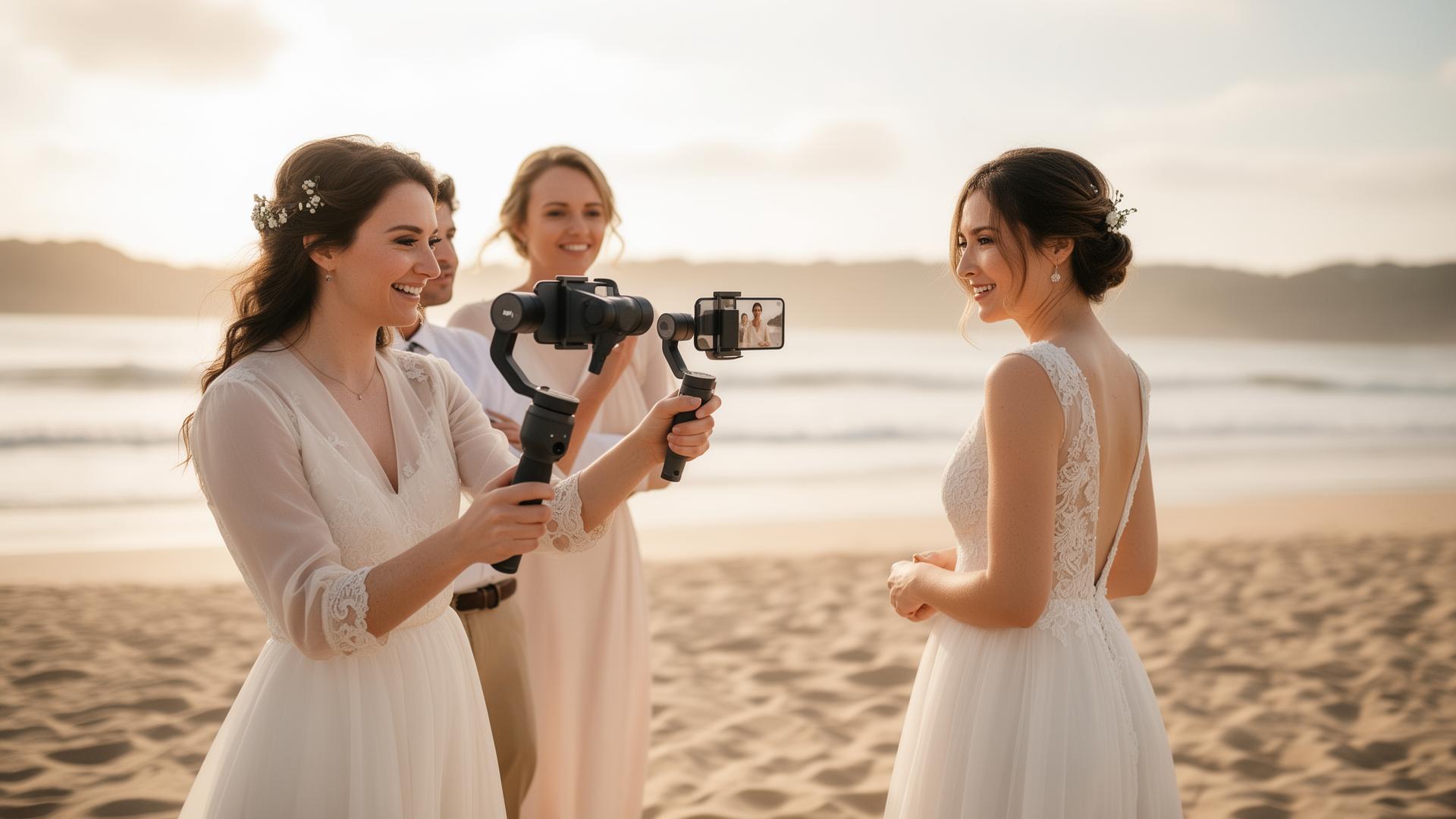
What Is a Wedding Content Creator? The 2026 Definitive Guide
Wedding content creators capture vertical, social-ready footage and deliver it same-day. Here's what they do, what they cost, and how they fit alongside your photographer and videographer.

Wedding Content Creator Pricing Guide: The 2026 Profit Playbook
The complete pricing system for wedding content creators — The Aisle Pricing Engine™, profit math, package architecture, regional rates, raise-rate triggers, and the contract clauses that protect your margin.
Is a Wedding Content Creator Worth It? An Honest Breakdown
When the spend pays off, when it doesn't, and the four questions to ask before adding a content creator to your wedding lineup.
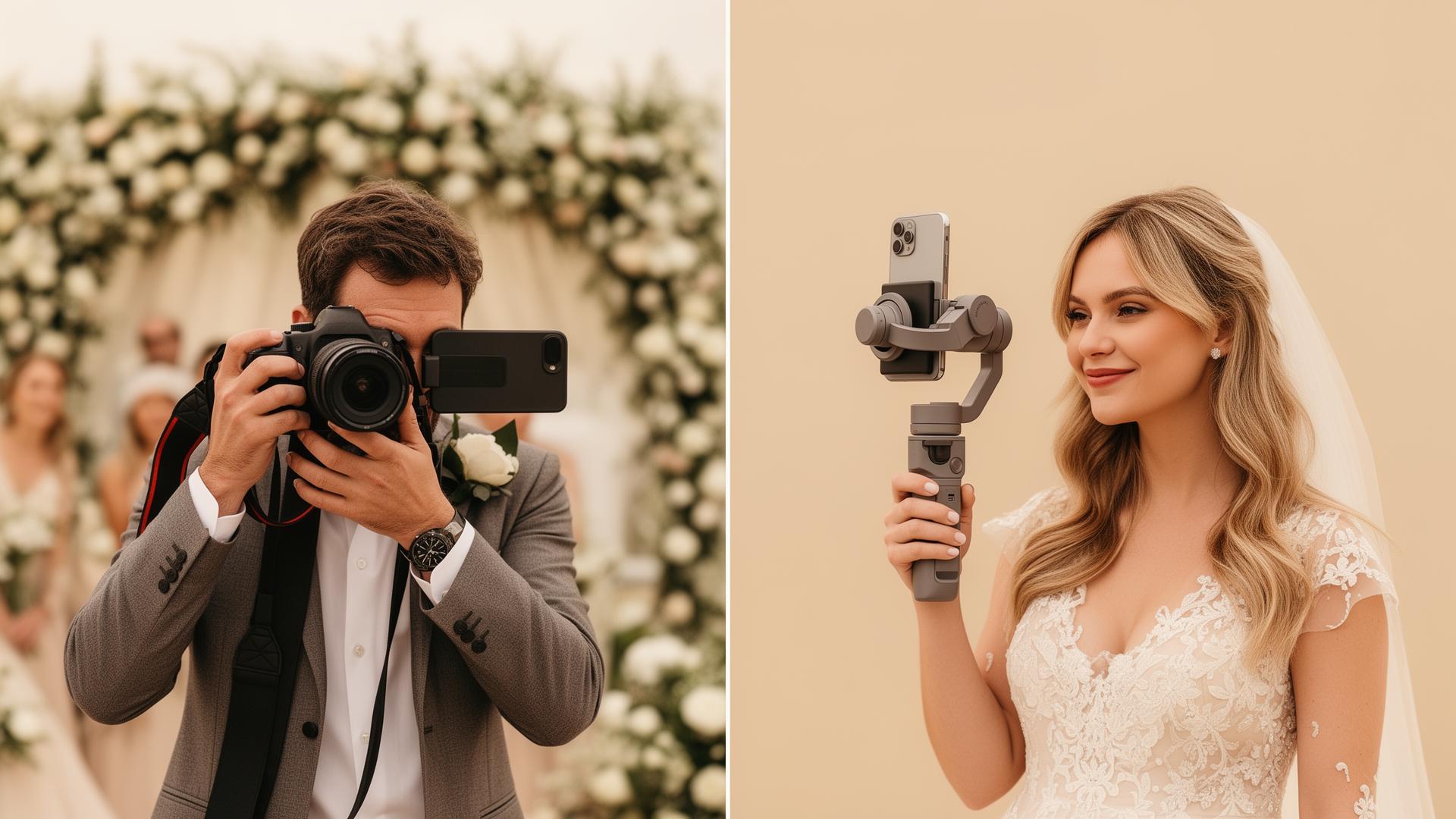
Wedding Content Creator vs Photographer: The Real Difference
Different gear, different output, different timeline. Why most modern weddings hire both — and where each role begins and ends.