Wedding Content Creator Equipment Guide (Real Kits, Real Costs)
The iPhone-first kit working creators actually use — stabilizers, mics, lenses, lighting, and the optional pro upgrades worth the spend.
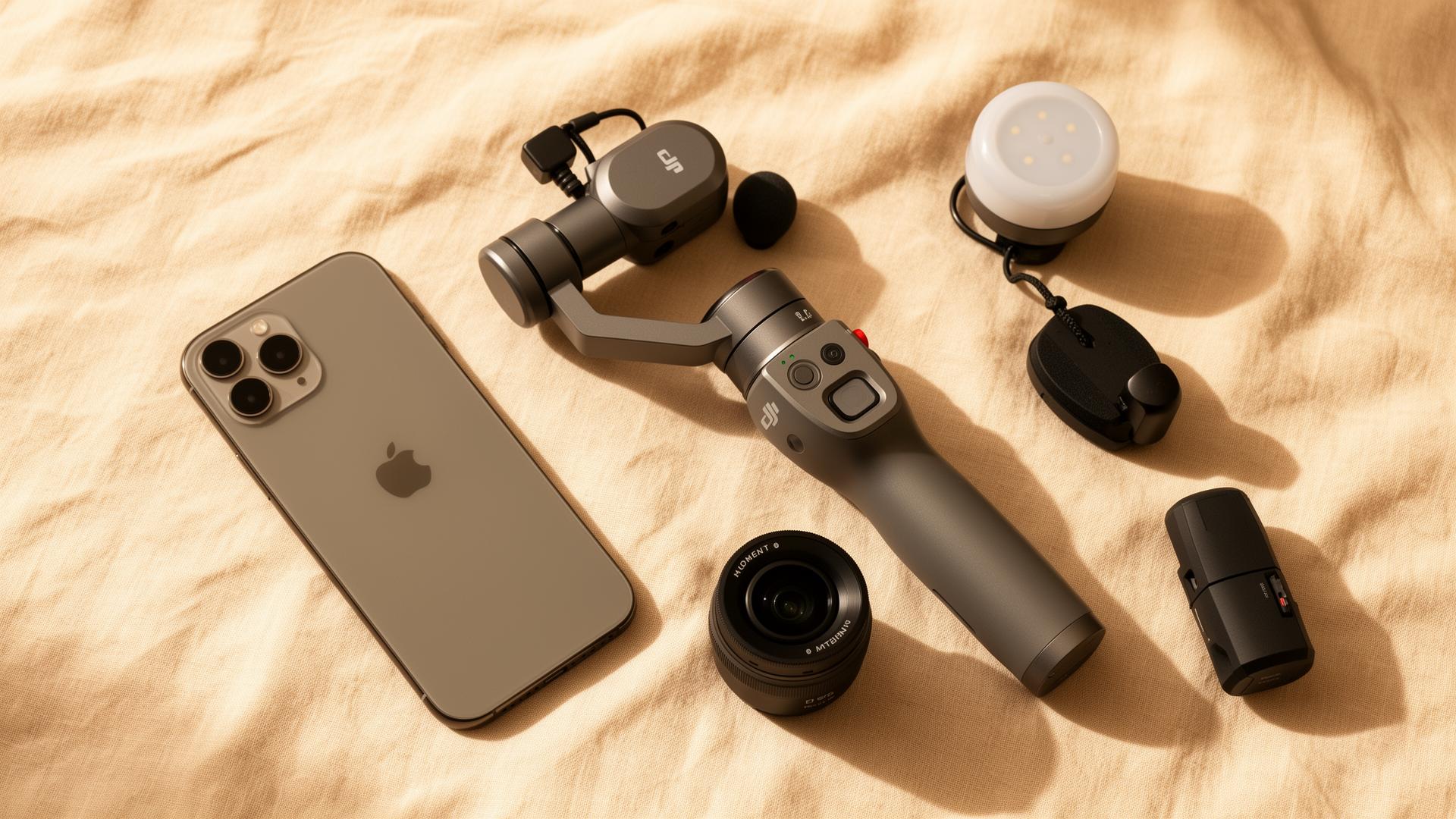
The most common question new wedding content creators ask is "what camera do I need?" The most common answer from working pros is "the one already in your pocket." This is the real gear guide — what actually works, what's overkill, and what to upgrade as you scale from your first wedding to your hundredth.
Quick answer
- iPhone Pro Max is the industry-standard primary camera, not a starter compromise.
- Audio is the highest-leverage gear upgrade — DJI Mic 2 or Rode Wireless GO II.
- Smartphone gimbals (DJI Osmo Mobile 7) cost $150 and prevent 90% of unusable shaky footage.
- Telephoto attachment lenses (Moment 58mm) handle compression and reaction shots.
- B-cameras (Sony FX3, A7S III) are upgrades for reception low-light, not starter gear.
- Always have a backup phone, backup mic, and backup SSD for offload.
Why iPhone-first is the working standard
Five reasons working creators stay iPhone-first even when they can afford cinema bodies:
- Native vertical workflow. Shoot vertical, deliver vertical, no cropping.
- Color matches social platforms. iPhone's native color science is calibrated for how the footage will be viewed.
- Form factor stays invisible. Guests think you're a friend filming, not a vendor.
- Same-day delivery workflow. Shoot, AirDrop to MacBook, edit in CapCut, send by midnight.
- Reliability. No card formatting issues, no codec gotchas, no overheating on summer wedding days.
Starter kit — $800–$1,400
Enough to shoot a wedding at a professional standard. What every new creator should buy before their first booking.
| Item | Recommendation | Price |
|---|---|---|
| Primary camera | iPhone 14 Pro (used) or 15 Pro | $600–$900 |
| Gimbal | DJI Osmo Mobile 7 | $159 |
| Wireless mic | DJI Mic Mini (2 TX + RX) | $169 |
| Telephoto lens | Moment 58mm | $150 |
| Memory/SSD | Samsung T7 Shield 1TB | $100 |
| Editing software | CapCut Pro (annual) | $75/yr |
Pro kit — $2,500–$4,500
After 15+ weddings, the upgrades that move quality and unlock higher-tier pricing.
| Item | Recommendation | Price |
|---|---|---|
| Primary camera | iPhone 16 Pro Max 1TB | $1,599 |
| Pro gimbal | DJI Osmo Mobile 7 Pro | $249 |
| Pro audio | DJI Mic 2 kit | $349 |
| Lens kit | Moment 58mm + 14mm wide + macro | $450 |
| On-camera light | Aputure MC Pro | $169 |
| Backup phone | iPhone 14 Pro | $600 |
| Drone (optional) | DJI Mini 4 Pro | $760 |
| Editing | Adobe Premiere + CapCut Pro | $240/yr |
Luxe / hybrid kit — $6,000+
For creators charging premium-tier rates ($4,500+) who deliver both verticals and a polished social film. Adds a cinema B-camera and proper lighting kit.
| Item | Recommendation | Price |
|---|---|---|
| Primary | iPhone 16 Pro Max 1TB | $1,599 |
| B-camera | Sony FX3 or A7S III | $2,200–$3,900 |
| B-camera lens | Sony 24-70mm f/2.8 GM II | $2,300 |
| Cinema gimbal | DJI RS 4 Pro | $869 |
| Audio | DJI Mic 2 + Tentacle Sync E | $700 |
| Lighting | 2x Aputure MT Pro + Amaran 60d | $550 |
| Drone | DJI Mini 4 Pro + Air 3S | $1,800 |
| Storage | 2x Samsung T9 2TB + LaCie Rugged | $500 |
Phone (primary) & cinema B-camera
iPhone Pro Max with 1TB storage is the right phone — the storage matters more than the model year. ProRes 4K records at roughly 6GB per minute; a full wedding day in ProRes can exceed 400GB. For most creators, recording H.265 4K (a much smaller file) is fine for deliverables and saves enormous storage hassle.
Cinema B-camera is for two things: low-light reception coverage that iPhone can't quite handle, and intentional stylized b-roll where the depth of field difference matters. The Sony FX3 and Sony A7S III are the most common picks because their low-light performance is wedding-changing.
Stabilizers
A smartphone gimbal is non-optional. Handheld vertical iPhone footage looks like a Snapchat story; gimbal-stabilized footage looks like a wedding film. DJI Osmo Mobile 7 is the current standard at $159; the 7 Pro adds longer battery and better tracking for $249.
For cinema B-camera, DJI RS 3 or RS 4 Pro is the standard. Don't try to use a smartphone gimbal with a cinema body — it won't hold weight.
Audio (the highest-leverage upgrade)
Bad audio ruins good footage. Good audio rescues mediocre footage. If you only upgrade one thing on the starter kit, upgrade audio.
- DJI Mic 2 ($349): two lavalier transmitters, 32-bit float recording, USB-C direct to iPhone.
- Rode Wireless GO II ($299): the older standard, equally reliable.
- DJI Mic Mini ($169): the budget option, fine for getting started.
Mic the officiant and one member of the couple for vows. Mic both members of the couple for first dance audio if you can.
Lenses
The two attachment lenses worth owning for iPhone work:
- Moment 58mm Telephoto ($150): compression for ceremony, reaction shots, portraits.
- Moment 14mm Wide ($150): tight getting-ready rooms, venue establishing shots.
Lighting
Most wedding receptions are intentionally dark. A small on-camera light gives you a fighting chance at the dance floor without becoming a flashlight in everyone's face.
- Aputure MC Pro ($169): pocketable, bi-color, RGB.
- Amaran AL-MX ($75): cheaper, no RGB, still solid.
Storage, backup, and accessories
- Samsung T7 Shield 1–2TB ($100–$180): rugged portable SSD for AirDrop offload.
- USB-C to Lightning (or USB-C-to-USB-C) cable: faster than AirDrop for ProRes files.
- Anker 20,000mAh power bank with USB-C PD: keeps iPhone alive through reception.
- 2x backup batteries for gimbal and mic.
- Soft messenger bag (Peak Design Everyday Sling 6L): discrete kit carry on the day.
Delivered before the last dance.
Aisle is the delivery platform built for wedding content creators — a storefront, same-day reel delivery, and a vendor referral loop, in one system.
Frequently asked questions
Do wedding content creators really shoot on iPhone?
Yes — the vast majority of working wedding content creators shoot iPhone-first. The iPhone 15 Pro Max and 16 Pro Max produce 4K vertical footage that's color-graded for native social platforms, and the form factor stays invisible at weddings in a way a cinema camera doesn't. Some pros carry a Sony FX3 or Canon R5C as a B-camera; almost none use cinema cameras as their primary tool.
What's the minimum gear to start as a wedding content creator?
iPhone 14 Pro (or newer), DJI Osmo Mobile 6 or 7, DJI Mic or Rode Wireless GO II, and a Moment 58mm telephoto lens. Total: $800–$1,400. This kit can shoot a full wedding day at a professional standard.
Should I buy a cinema camera as a wedding content creator?
Not until your first 15–20 weddings are shot. By then you'll know whether you want a B-camera for low-light reception coverage or stylized portrait b-roll. The most common pro add is a Sony FX3 ($3,900) or used Sony A7S III ($2,200 used) — but it's an upgrade, not a starting point.
What microphone is best for wedding content creators?
DJI Mic 2 is the current standard — two lavalier transmitters plus a receiver that connects directly to iPhone via Lightning or USB-C. It costs around $349. Rode Wireless GO II is the older standard at a similar price. Both are reliable; choose based on which interface you find more intuitive.
Do I need a drone?
It's an optional upsell, not a must-have. DJI Mini 4 Pro ($760) covers most wedding aerial needs and is light enough to fly without FAA Part 107 in the US. If you offer drone footage as a $300–$700 add-on and attach at 20%+, it pays for itself within 5–8 weddings.
What lens do I need for the iPhone?
A Moment 58mm telephoto ($150) is the most-used wedding lens for getting compression during ceremony shots and reaction moments. Optional: Moment 14mm wide ($150) for getting-ready spaces and venue establishing shots.
How much storage do I need for a wedding?
Plan for 100–200 GB per wedding in 4K. iPhone Pro Max 1TB ($1,599) handles it natively. If you shoot 256GB or 512GB models, carry a portable SSD (Samsung T7 Shield 2TB, $180) and offload during breaks. Always have a backup workflow.
Is the iPhone 16 Pro Max worth upgrading from 15 Pro Max?
Only if you're new to iPhone shooting. The 15 Pro Max and 16 Pro Max both shoot ProRes 4K and have similar dynamic range. If you already own a 15 Pro Max, the upgrade isn't urgent — invest in better audio, lighting, or a B-camera before swapping phones.
Questions, answered.
- Do wedding content creators really shoot on iPhone?
- Yes — the vast majority of working wedding content creators shoot iPhone-first. The iPhone 15 Pro Max and 16 Pro Max produce 4K vertical footage that's color-graded for native social platforms, and the form factor stays invisible at weddings in a way a cinema camera doesn't. Some pros carry a Sony FX3 or Canon R5C as a B-camera; almost none use cinema cameras as their primary tool.
- What's the minimum gear to start as a wedding content creator?
- iPhone 14 Pro (or newer), DJI Osmo Mobile 6 or 7, DJI Mic or Rode Wireless GO II, and a Moment 58mm telephoto lens. Total: $800–$1,400. This kit can shoot a full wedding day at a professional standard.
- Should I buy a cinema camera as a wedding content creator?
- Not until your first 15–20 weddings are shot. By then you'll know whether you want a B-camera for low-light reception coverage or stylized portrait b-roll. The most common pro add is a Sony FX3 ($3,900) or used Sony A7S III ($2,200 used) — but it's an upgrade, not a starting point.
- What microphone is best for wedding content creators?
- DJI Mic 2 is the current standard — two lavalier transmitters plus a receiver that connects directly to iPhone via Lightning or USB-C. It costs around $349. Rode Wireless GO II is the older standard at a similar price. Both are reliable; choose based on which interface you find more intuitive.
- Do I need a drone?
- It's an optional upsell, not a must-have. DJI Mini 4 Pro ($760) covers most wedding aerial needs and is light enough to fly without FAA Part 107 in the US. If you offer drone footage as a $300–$700 add-on and attach at 20%+, it pays for itself within 5–8 weddings.
- What lens do I need for the iPhone?
- A Moment 58mm telephoto ($150) is the most-used wedding lens for getting compression during ceremony shots and reaction moments. Optional: Moment 14mm wide ($150) for getting-ready spaces and venue establishing shots.
- How much storage do I need for a wedding?
- Plan for 100–200 GB per wedding in 4K. iPhone Pro Max 1TB ($1,599) handles it natively. If you shoot 256GB or 512GB models, carry a portable SSD (Samsung T7 Shield 2TB, $180) and offload during breaks. Always have a backup workflow.
- Is the iPhone 16 Pro Max worth upgrading from 15 Pro Max?
- Only if you're new to iPhone shooting. The 15 Pro Max and 16 Pro Max both shoot ProRes 4K and have similar dynamic range. If you already own a 15 Pro Max, the upgrade isn't urgent — invest in better audio, lighting, or a B-camera before swapping phones.
Delivered before the last dance.
Aisle is the delivery platform built for wedding content creators — a storefront, same-day reel delivery, and a vendor referral loop, in one system.
Get the Aisle Creator Brief.
The weekly newsletter for wedding content creators — pricing benchmarks, day-of workflows, and the tactics that book out studios. Free.
One email a week. Unsubscribe in a click.
More from the Knowledge Library.
What Is a Wedding Content Creator? The 2026 Definitive Guide
Wedding content creators capture vertical, social-ready footage and deliver it same-day. Here's what they do, what they cost, and how they fit alongside your photographer and videographer.

How to Start a Wedding Content Creator Business (2026 Playbook)
The complete operating plan — positioning, pricing, packaging, gear, contracts, delivery workflow, and the first 90 days of bookings — for launching a profitable wedding content creator business.
Wedding Content Creator Pricing Guide: The 2026 Profit Playbook
The complete pricing system for wedding content creators — The Aisle Pricing Engine™, profit math, package architecture, regional rates, raise-rate triggers, and the contract clauses that protect your margin.
Is a Wedding Content Creator Worth It? An Honest Breakdown
When the spend pays off, when it doesn't, and the four questions to ask before adding a content creator to your wedding lineup.